
Articles

The 6mm ARC, or Advanced Rifle Cartridge, is essentially a shortened 6.5 Grendel that has been necked down to 6mm. The ability to load high BC bullets to magazine length in an AR-style rifle makes this efficient little cartridge an excellent choice for long range and target work. It also has the ability to shoot lighter varmint bullets as well as having enough velocity to achieve proper bullet performance with many hunting type bullets suitable for deer size game. The 6mm ARC makes an excellent choice for those looking for a low recoil, flexible option in AR’s and in bolt action rifles without much downside. Several manufacturers are offering complete AR-style rifles and many more are offering barrels. Bolt action and single shot rifles and pistols are also available in this cartridge.
To order Starline’s cases, please visit a dealer near you or order factory direct online at www.starlinebrass.com.
At Starline, multiple hand and machine inspections ensure cosmetic and dimensional characteristics meet the highest level of exacting standards. All Starline cases are contained between each step of the manufacturing process to maintain superior quality and consistency.
Starline’s high-quality case lineup now includes 270 Winchester, 30-06 Springfield, 300 Ham'r, 350 Legend, 348 Winchester, 375 Winchester, 5.56x45mm, 222 Remington, 30-30 Winchester and 7.65 French Long.
Starline is a family owned business that prides itself on producing the highest quality brass cases available at the best possible price. For more than 45 years, Starline’s unique manufacturing process and commitment from their team of employees has distinguished Starline from the competition. Starline is now using that 45 years of experience to build a complete line of premium rifle cases.
Stay up to date with Starline’s new handgun and rifle case releases, exciting promotions and other great content.
Follow Starline at:
www.starlinebrass.com
https://www.facebook.com/StarlineBrass/
www.youtube.com/user/StarlineBrass
www.twitter.com/starlinebrass
www.instagram.com/starlinebrass
Even after his passing, my father still finds ways to show me how much I have yet to learn in the reloading game. It was the first thought that crossed my mind when I found one of his old reloading presses lying among the chaos that was his downstairs workbench. However, it did not always look that way. When he used it, the space was meticulous. Every item was set in its place for a specific and sometimes a peculiar reason. The engineer in him laid out every single inch of his table so he could maximize reliability and efficiency.
But over time, entropy took the workbench from a hub for reloading and leatherwork to a place of storage, partly because we did not have the time to do any reloading and partly because as my father aged, his health issues prevented him from doing the things he loved. Piles of tools, reloading equipment, archery, and fly-fishing goods had filled the space with no discernable sign of organization. And since he could not make it down the stairs to see the mess and holler about it, the chaos continued for years. But that never stopped him from having long discussions with my older brother, cousin, and me about what his favorite calibers were to shoot and reload, equipment he used, and tips he had for us. And his memory was as sharp as a tack. If tested, he could probably tell you specific load data from almost any book and could tell you every single tool he had in his possession.
So, it was a surprise to us when we began to clean up some things by his workbench and had unearthed such an unusual piece of reloading antiquity: a Herter’s Super Model 9 two-stage reloading press. This press was something we had never seen before and oddly enough, my father never spoke of. I can recall him mentioning he had at least two presses on his workbench. One was a RCBS Rock Chucker (which he often used) and the other was a Lee Pro 1000 progressive press set up to handle 41 Remington Magnum. It almost seemed like the Herter’s press was an afterthought on his reloading bench. It was left on the bottom shelf, out of sight, out of reach, and out of mind.
Maybe the press was no longer functional? There was obviously a great deal of rust on the steel parts and voids in the paint coverage on the base. But after a quick inspection, it was evident that everything indexed smoothly with no grinding or hang up. In fact, it was so smooth that one could question why this little machine was relegated to the dark recesses of the basement. What had it done to deserve such a dishonorable sendoff?
Intrigued with the design of the Model 9, it was decided that the press could be salvaged from an untimely demise. So, it was off to the internet to find out as much as possible about the Super Model 9. As it would turn out, not much. There are but only a handful of people who have seen one and even fewer that own one. However, the consensus is that the press was manufactured for only two years, from 1952-1953, and it was the first press offered by Herter’s. And, while unconfirmed, there may have been a connection between Herter’s press designs and the Dunbar Glass Corporation. There is certainly an uncanny resemblance between a Super Model 9 and a Dunbar H-press. Both presses are roughly the same size and weight, accept standard 7/8”-14 threaded dies, and have a similar priming stage. But they also have some nuanced differences. For example, the hinged cam arms on the Herter’s press are split into two separate upper and lower arms, while the Dunbar press has only solid arms.
Primed with about as much information as possible, the decision to restore the Model 9 seemed obvious, not only because it had the potential to be a fun piece of reloading equipment but also sentimentally because my father and the press shared the same birth year. Furthermore, it would be solve the mystery of what compelled my father to keep such a rust bucket if it was not a mainstay on his benchtop.
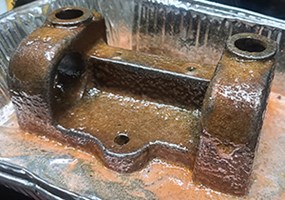
The first step in the restoration was to fully disassemble the press. After snapping a few reference photos of the
parts, the Model 9 was ready for a takedown. Disassembling a Herter’s Super Model 9 press is a thing of beauty.
There is something to be said about how simple yet elegant the design is. With about three tools, everything could
be taken apart with ease. No springs flying off. No set screws to worry about. Nothing a set of mechanics tools
and a pair of needle-nose pliers could not handle. Once disassembled, the base of the press took a bath in
CitriStrip while the metal parts were degreased and dropped into Evapo-rust solution. After a bit of scrubbing with
a wire brush and elbow grease, the parts were free of rust and the base was ready for a repaint.
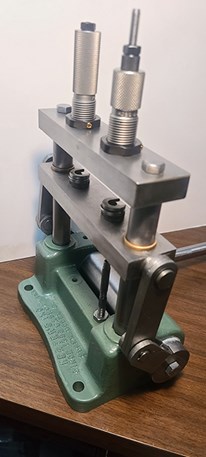
In between paint cycles, the steel parts were polished with 400-grit sandpaper and some Scotch-Brite. Everything came to a nice shine and to my surprise, my dad left behind a little clue about the press. After scrubbing the RCBS shell holder H ram adapters, out popped an RCBS number six holder from their snap rings, which are used for reloading .38/.357. My father’s favorite pistol caliber.
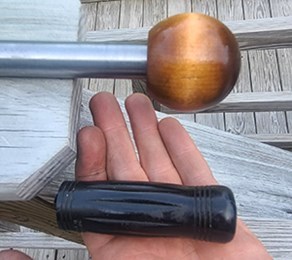
The remaining work on the press was straightforward and before long, the press was near ready to come back together. However, there was one touch that needed to be addressed before reassembly. Something had to be done to resolve the matter of the tacky looking black plastic handle. There was no way that thing was going to go back on. So, using a piece of hardwood and a lathe, a circular handle was turned to fit onto the throwing arm. Once complete, it was treated with some stain and water-based polyurethane for a protective hard finish. It was time for reassembly.
After a bit of light greasing and careful fitting, the press was ready to go for a test drive. For its inaugural
run, it was set up to handle Starline 41 special cases using two RCBS dies along with a pair of number thirty RCBS
shell holders. For powder drop, a case activated Hornady Powder measure was dialed in to drop 9.5 grains of Unique
Powder. 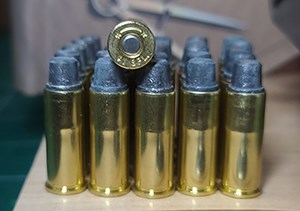 And
finally, a Lee 41 Remington Magnum Seater die was cut to a shorter length in order to seat the bullets and crimp the
shorter cases. I grabbed the newly finished handle, indexed the arm downward, and felt a big smile grow on my face.
The press moved smoothly, quietly, and had tons of leverage on the Starline brass. And with every pull of the
handle, I thought about how my dad used the press before me. Another smile, this time bittersweet, grew. I could
see why my father had kept the Model 9 hidden on the bottom shelf of his bench. He wanted it to be out of sight
from his two sons who would probably have tampered with or broken it. Out of sight. Out of reach. But hardly out
of mind. He loved this little press. While Herter’s Super Model 9 may be gone from manufacture, it should hardly
be forgotten. And just like that, my dad showed me exactly how much I still have to learn from him, not only about
reloading, but life as well.
And
finally, a Lee 41 Remington Magnum Seater die was cut to a shorter length in order to seat the bullets and crimp the
shorter cases. I grabbed the newly finished handle, indexed the arm downward, and felt a big smile grow on my face.
The press moved smoothly, quietly, and had tons of leverage on the Starline brass. And with every pull of the
handle, I thought about how my dad used the press before me. Another smile, this time bittersweet, grew. I could
see why my father had kept the Model 9 hidden on the bottom shelf of his bench. He wanted it to be out of sight
from his two sons who would probably have tampered with or broken it. Out of sight. Out of reach. But hardly out
of mind. He loved this little press. While Herter’s Super Model 9 may be gone from manufacture, it should hardly
be forgotten. And just like that, my dad showed me exactly how much I still have to learn from him, not only about
reloading, but life as well.
Often times when conversation of famous gunmen of the old west comes up, many want to know what gun/cartridge said gunmen used. Dime novels and Hollywood have often spread inaccuracies and caused false perceptions of what firearms were used.
Ned Buntline spread the fallacy that Wyatt Earp carried one of his 12" barrel single action revolvers at the OK Corral. The truth is, many of the famous lawmen were gun guys like you and I, they experimented with different guns, often trying out the latest and greatest feat in firearms tech. Wyatt Earp most likely carried a Smith and Wesson No. 3 at the Fremont Street fight, but was known to carry many different guns throughout his pistol packing days.
Frank Hamer, while known for carrying his Single Action Army well into the 20th Century, was always trying out a new rifle, hence why he is seen with Savage 99s and later his personal favorite rifle, the Remington Model 8. Jeff Milton, owned many handguns and rifles, and stayed up to date with modern improvements as well, hence his use of the space-age looking Savage Model 1907 automatic during the 1917 Tombstone bank robbery previously written about. This is all to say that the men of old west lore were no different than we are today in terms of weapons modernization.
In the case of personal protection, there is no such thing as an "unfair advantage." With this change in weaponry came a change in calibers. When Jeff Milton first joined the Texas Rangers he purchased an ornately engraved, pearl stocked Colt SAA in .44-40, however after spending some time shooting it, he had an issue of raised primers in his ammunition and found the cylinder would bind up and would not rotate. Whether this was a case of bad ammo and he took it for granted that all .44-40 would cause this issue, he decided to get rid of the pistol. In his mind, he didn't feel comfortable entrusting his life with something that hadn't functioned properly with him, so he traded the 44-40 SAA with a gambler who had an equally beautiful SAA in .45 Colt. Jeff never went back and carried a .45 Colt for most of his days packing iron. Whether he was carrying the Savage .380 as his primary sidearm in 1917 or as a backup is unclear.
Many at the time had began carrying the compact "pocket pistols" including Frank James. By today's standards, the .380 is considered rather puny and by some estimations, obsolete. That's neither here nor there, but one thing is certain he was proficient with it. In the case of Capt. Hamer, using "Old Lucky", his .45 Colt SAA, that wasn't a matter of defiance of the new age, but rather he used what he knew and was comfortable with. In 1934 when he took after the trail of murderous cowards Clyde Barrow and Bonnie Parker, he obtained a Colt Government Model in Super 38. At the time, Colt's fast and deadly Super 38 was the ticket for penetrating vehicle bodies and period body armor, something the fat and slow moving .45 didn't do well. His situation included the possibility of having to shoot through or into a vehicle, a possibility that became a reality in the end.
In conclusion, professionals and responsible gun owners are meticulous in their selection of a firearm and caliber.
The truth is there is no one right choice when shooting, some calibers work better than others for certain applications. The one thing that all the aforementioned men had in common was they chose quality firearms and effective cartridges that fit their situation, and they practiced with them constantly, so should you.
In the shooting world it's important to remember that quality should be the goal of all shooters. Settling for second best isn't an option. In the case of brass for handloading, Starline has been consistently the best brass for a wide variety of cartridges including all that I mentioned earlier.
On the evening of February 15, 1900, five men hitched their horses outside the train depot in Fairbank, Arizona. The town, a stop on the train route from Nogales to Benson, was quite a bustling community then, as all the mail and express business from nearby Tombstone was handled there. The five men were "Bravo Juan" Tom Yoas, Bob Brown, (alias Bob Burns), brothers George and Louis Owens, and "Three Fingered Jack" Dunlop. They looked like working cowboys, and according to some, acted as if they were drunk.
The sight wouldn't be out of the ordinary on an Arizona evening, but the reality was these men were not drunken cowboys, they were bandits, and they aimed to rob the train. Planning for the raid had commenced days prior, they knew the route, they knew the cargo and they knew what protection the Wells Fargo Express car touted.
There were multiple guards or "express messengers" who accompanied the valuable goods hauled by the Southern Pacific Railroad. Each had schedules and rotated, but one man, in particular, had to be avoided if the bandits planned on an easy job, he was a 38-year-old lawman who had made a name for himself along the American Southwest, his name was Jeff Davis Milton.
Through careful planning and crooked lawmen, the crew had determined a date Milton was not supposed to be riding the train. As the five lounged or stumbled around the depot, anxiously awaiting that distant whistle, they were confident. This would be easy, a cakewalk. Just as the evening sky darkened, the train pulled into the station. The usual crowds were gathered, a stagecoach awaited the passengers and the station hands prepared to unload cargo.
As the train slowed to a halt, with steam rising with a hiss from the various valves and orifices, the freight car door slid open, behind it and unbeknown to the approaching bandits, was Jeff Milton, who had taken the place of another messenger who was ill. Milton said hello to the Wells Fargo clerk and began unloading some packages. Just then, through the crowd of passengers and workers, a voice yelled, "Put your hands up." Jeff and the clerk thought it was a joke and continued about their business, but the next shout came from a Winchester rifle.
The shot took Jeff's Stetson from his head. This was no joke. Milton thought to reach for his .45 but remembered he had left in on the desk behind him. The only weapon within reach was a 10 gauge Winchester Model 1887, but what he saw next rendered the shotguns useless. The thieves had gathered bystanders in front of them and had the barrels of their .38-55 Winchester repeaters poked out from the human shields.
Again one of the criminals shouted, "Hands up, and stand aside!" Jeff couldn't stand there unarmed and let them take the money he was entrusted to protect. He grabbed the shotgun and told them, "If there's anything you want, come and get it." The gunmen opened fire. Bullets tore through Milton's shirt and slammed into his left arm and side, wood chips and sparks from lead hitting steel flew wild, and the deafening roar of rifles cracked in the desert.
Milton fell to the ground. Through the haze of black powder smoke, the robbers saw him fall, blood oozing from his wounds. "Three-Fingered Jack" Dunlop and Tom Yoas rushed the car, but Milton raised the shotgun and fired, sending 11 pellets into the chest of Dunlop and the rest into the rear end of Yoas.
While the others dove for cover, Milton stood and slammed the steel door closed. Bleeding and writhing in pain, he wrangled the keys from his pocket, locked the safe and tossed the keys away. Every move sent searing hot pain through his body and as the life drained from him, a black haze began to cut through the lingering gunsmoke and slowly close in. He ripped a piece of his shirt off and used it as a tourniquet, tying the cloth around the upper part of his mangled arm, he tightened it, restricting the flow of blood pouring and squirting from his wounds. Moments later the darkness closed in and he collapsed.
The bandits circled the train car riddling it with bullet after bullet. As if by Divine intervention, Milton had fallen between two heavy trunks, which had shielded him from the blitzkrieg of rifle shots. The desperate criminals were not taking any more chances, worried that Milton might have survived the barrage, they sent the terrified clerk into the car. He told them Milton was dead and only then did they enter. Their efforts, however, proved to be fruitless. Expecting no resistance, they hadn't brought any means of opening a safe and were forced to rob their hostages.
They left with a little over $40. Jack Dunlop would die from his wounds the following day and the other four criminals would be captured within a few days of the robbery. Jeff Milton was rushed to a doctor and survived his wounds. His left arm took the brunt of the rifle fire, and though doctors didn't have to amputate, he would permanently lose the use of it.
The Fairbank fight is one of those stories that can fully define a man. In Jeff Milton's case, he was guarding other people's money, and even though he could've gotten through the ordeal without a scratch by merely stepping aside, it wasn't his nature. He had a job to do, and he did it.
Skeeter Skelton once wrote that
Jeff Davis Milton was "perhaps the most efficient, most successful, and longest-lived officer of them all...".
Milton's law enforcement career spanned 4 decades in which he served as a Texas Ranger, deputy sheriff, U.S.
Marshal, Wells Fargo Railroad Guard and finally as a Mounted Customs Inspector along the border. Throughout that
long and rather colorful career, he faced off against many a bad man, and one way or another he always came
through breathing. His last gunfight would ironically take place in Tombstone, Az. On Friday, November 2, 1917,
a dimwitted cinema owner from Gleeson, AZ, named Fred Koch decided to rob the First National Bank of Tombstone.
He waited outside the First National and the Cochise County Bank for most of the day on November 1, scouting and
hoping for an opportune moment to stick one of the places up. It was recorded in multiple papers that he was
wearing two suits of clothes, one of which being an army uniform. At approximately 12:30 pm Brandt's son and
assistant cashier, Bradford, left and walked to the post office, leaving only T.R. inside the bank. This was his
chance. The ill-prepared Fred Koch walked through the door and leveled a revolver at the head cashier. Brandt
was a tough character, and he did not plan on letting this tramp steal the money his neighbors had entrusted in
his care. Inside the cashier's cage, just within reach was a 10-gauge Winchester Model 1887 shotgun, Brandt
reached for it. He was fast, but not fast enough. Koch shot him twice with what newspapers described as a ".41
caliber Army Model revolver". With two chest wounds, Brandt fell to the floor. He was a well-loved citizen of
Tombstone, and as fate would have it...Jeff Milton was sitting down to lunch a few blocks away. Milton was on
patrol as a Customs Inspector and had since traded his horse in for a Ford Model T. After Koch shot Brandt, he
tried to enter the locked cashiers' cage. After several unsuccessful attempts, he gave up, ran into the street
and away into the desert.
Milton along with Cochise
County Undersheriff, Guy Welch pointed the tin Lizzy toward the outlaw and gave chase. It wasn't long before the
running murderer came into view. Milton hopped out of his car and yelled for Koch to stop. Koch didn't. Milton
drew his Savage Model 1907 .380 automatic and aimed at Koch who was supposedly somewhere between 50 and 100
yards away. Milton, who had lost the use of his left arm in a gun battle in Fairbank, AZ a few years before,
free-handedly fired the pistol. Koch was hit in the shoulder and crumpled to the ground. He was taken back to
town where he was tried and later sentenced to life in the State Penitentiary in Florence, AZ. T.R. Brandt would
fight hard for nearly a month, before finally succumbing to his wounds. Rumor has it, in the trial the judge
asked Milton. "Were you aiming to hit him in the arm, Mr. Milton?" Milton admitted, "I never shoot to wound,
always to kill." The judge laughed and turned to Koch, who was sobbing uncontrollably at his sentencing, "Son,'
the judge said, 'consider yourself one of the luckiest men alive. You're the only man who Jeff Milton has shot
that didn't die where he laid." Milton would live a long, happy life and in 1947, the old lawman passed
away.
Whether you load big-bore cartridges like the .45 Colt or small-bore cartridges like the .380 ACP, Starline Brass has the finest in quality when it comes to brass. For accuracy, affordability and most importantly, reliability, choose Starline for all your brass needs.
When the US Army entered the market for a handgun that employed metallic cartridges in post Civil War America, the Colt Firearms Company, was slow to participate. Around 1869, Smith and Wesson released their .44 S&W American cartridge. A heavy-hitting round that in fact, was the first big bore sixgun in the self-contained cartridge era. In 1871 the US Army adopted the cartridge, and the fine folks down at Colt decided they'd better get to work. If they were slow to start at the beginning of the new decade, they made up for it three years later. The year 1873 should be considered a major turning point in American history, at least in the firearms realm. Winchester would introduce the famous Model of 1873, the so-called "Rifle that Won the West." Two new inventions from Colt, however, would overshadow the repeater and later become as synonymous with America as apple pie or baseball. When the door of Colt's room for new inventions opened and the steam abated with a hiss, beams of light shined, angelic harps played and on the altar of American genius laid the Colt 1873 Single Action Army and it's cartridge, the .45 Colt. The cartridge would pave the way for big bore sixguns and hold the title for the most powerful handgun cartridge for decades until the introduction of the .357 Magnum in 1935. Out of all the cartridges from the black powder era, the .45 Colt has survived and thrived in the years since 1873, with more handguns being made now for the versatile cartridge than ever before. In the next few weeks, we'll look into the history of the caliber and tell some of the stories that made the .45 Colt the legend that it is today.
My name is Ethan Douglas, and I run the Instagram page @the_classic_outdoorsman. As an avid hunter, shooter and handloader I want the best when it comes to cartridge components. Since I began loading, the only brass I've used for my six-guns and pistols has been Starline Brass. In this writer’s opinion, they're the best in the business for quality and affordability.
My Poly Tech International AK-47S has served me well and for over 17 years. It is the rifle I used to test all my loads for this article.
History of the 7.62x39mm
January 23, 1942, 321 miles west of Moscow, the village of Kholm Russia is encircled by the German Army. 5,500 German troops hold this position for 105 days. The German’s are fielding a new breed of self-loading rifle, the Maschinenkarabiner 42(W) or MKb42 developed by Carl Walther. It fires the 7.92x33mm Kurz (short) at a velocity of 2,450 ft/sec from a 30-round magazine and has a cyclic rate of 600rpm.
Between three to five thousand rifles are said to have been sent to the eastern front as part of the German rifle trials. Besides the trusted k98 Mauser, the German Army fielded many firearms capable of full automatic fire. The Russian Army also fielded some semi and full automatic arms, but the bulk of the Russian infantry was still using the battle proven M1891 Mosin-Nagant chambered in 7.62x54R (Russian). The Nagant had a muzzle velocity of 2,650 ft/sec and fired from a 5-round integral box magazine.
It’s been alleged that the Russian high command was more than interested in the German’s 7.92 Kurz and soon started developing their own version and the rifle to chamber it. In 1943, the Russian Technical Council of the People's Commissariat for Armaments soon developed their own intermediate range cartridge—the 7.62x39mm.
After its introduction, it would soon be paired up with the newest rifle in the Russian arsenal, the SKS-45 (Samozaryadny Karabin sistemy Simonova) designed in 1943 by Sergei Gavrilovich Simonov. The SKS saw service with front line Russian troops till the early 1950s with an estimated 2.7 million rifles manufactured. About that time, a Russian small arms designer by the name of Mikhail Timofeyevich Kalashnikov was making history, although he didn’t quite know it at the time. After years of work, Kalashnikov’s labors were rewarded and in 1948, the 7.62x39mm cartridge was being fired from his Avtomát Kaláshnikova Model 1947 and placed in service with the Russian military.
The AK-47 is without a doubt, the most manufactured rifle in the world. Over 121 countries either manufacture and or field some variant of this rifle. It’s considered so significant in Mozambique that their flag includes the image of an AK-47 with a fixed bayonet. It’s estimated that over 175 million AK-47 rifles and its variants have been manufactured to date, but with new rifles being manufactured every day, I’m sure this number is significantly higher.
There has always been a dispute between the cartridge and the rifle that fires it. Many believe its dependability is unquestionable, but its inaccuracy at ranges past 300 yards continues to be debated. The 7.62x39mm also carries the scrutiny of being considered an underpowered cartridge because of its short case. One fact that should never be contested is how many people have met their demise from the business end of this underpowered cartridge, fired from this inaccurate rifle.
Reloading the 7.62x39mm
Ok, you’re ready to reload all the free brass you collected at the range. The first of three issues you’ll experience is most imported ammunition isn’t brass at all; it’s steel and therefore not reloadable. Use a magnet to sort through your spoils and separate everything that sticks and scrap it. Secondly, even if it’s brass, it may be Berdan-primed, reloadable, yes, easy, no, unless you really love a good reloading challenge! And third, some companies manufacture their brass with either small or large primer pockets, this will require you to sort brass for obvious reasons. This is a personal choice as to which size you use. Starline uses large rifle primers, ergo, so do I and on average you get more than 100 feet per second more from large primers, the chronograph doesn’t lie. There’s no harm in breathing new life into free brass if you have the time to sort out the undesirables, but this will undoubtedly cause a delay in your ammo production. I personally would rather be filling an ammo can with ammunition I know is made from new reloadable brass.
After you have purchased your desired amount of Starline brass, the bullets you're loading will be dictated by the rifle you’re loading it for. Let’s say you own a Ruger Mini Thirty that was manufactured during or before 1992, .308” diameter bullets will do nicely as that’s the bore diameter the barrels were manufactured for. After 1992, they switched to a barrel that used utilized the .311/.312 bullets, employing a 1-10-inch right-hand twist. Military rifles such as the SKS and AK-47 tend to be .311” diameter. If you’re not sure or unable to find the bore diameter information, here’s how you find it. Purchase an ingot of Cerro safe chamber casting alloy from Brownell’s and follow the simple instructions, measure your bore cast with a caliper and the diameter mystery will be resolved. If it’s a modern rifle, you may find the bore diameter in the instruction manual or on the manufacturer’s website. What about customer service you ask? Keep in mind, most firearms manufacturers discourage or downright forbid you from using hand loads or reloads for liability reasons.
You can safely fire .311” bullets out of a .308 diameter bore if necessary, but it is more suitable for those with an advanced degree in hand loading. This technique may be especially useful if you have a .308 caliber rifle with a shot out bore. The larger diameter bullets will fill in the gap of missing bore material and in some cases makes the rifle serviceable and more accurate once again. This saves you from having to pay the gunsmith or purchase a new rifle.
If you are hunting or target shooting and accuracy is a necessity, then sweat the details and work up an accurate load for the barrel diameter you’re using. Keep in mind that regular and full-length rifle dies may not size the brass so it will fit or function in tight-chambered semi-automatics, pump action and lever-action rifles. Small base dies resize cases below SAAMI minimums, reducing the shoulder and body by a few thousandths. Using a small base sizing die guarantees fit and function.
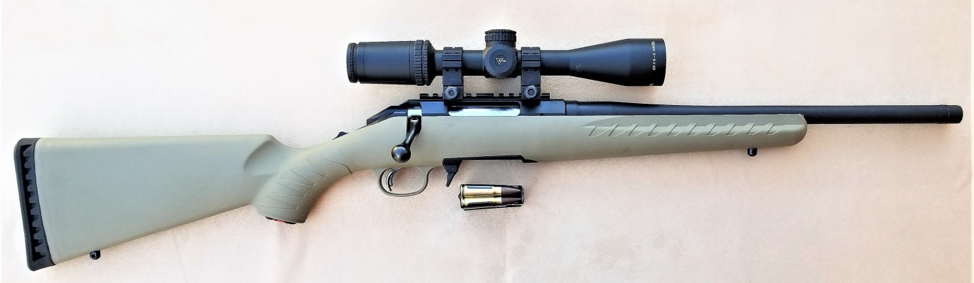
The Ruger American Ranch chambered in 7.63x39mm is a great platform for shooting all the non FMJ loads you can load for hunting and target shooting.
For this article I used the AR Series Small Base Taper Crimp Die Set from RCBS. The taper crimp is ideal for bullets without cannelures (One or more grooves cut around the circumference of a bullet where the crimped case can grip the bullet) such as FMJ bullets. The 7.62x39 AR series dies also come with an expander ball for resizing brass for loading .308” diameter bullets. If you use bullets with cannelures, simply purchase the 7.62x39 seater die that has a built-in roll crimper and it will sit nicely in that third slot in your RCBS die box.
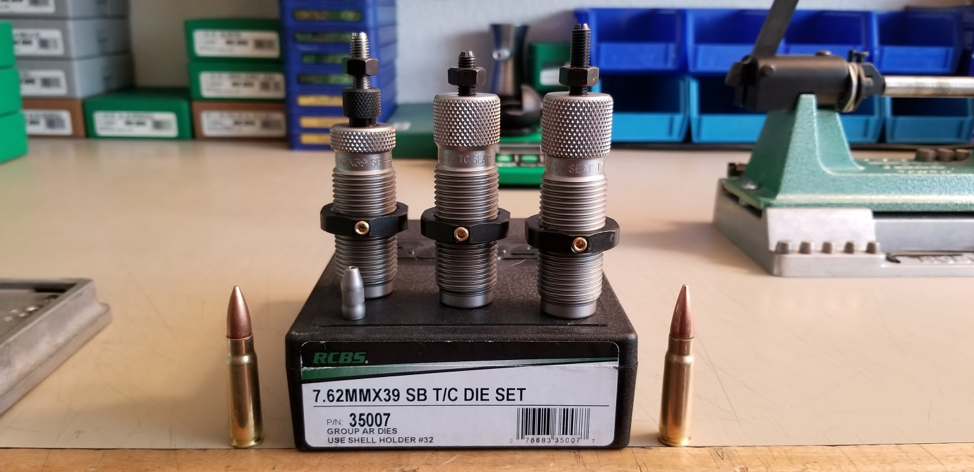
The two dies on the left belong to the AR Series 7.62x39mm Small Base T/C (Taper Crimp) Die Set from RCBS. The die on the far right is the RCBS 7.63x39 Seater die for roll crimping bullets with cannelures.
There are many types of powders used in the loading process.
Some powders are flexible enough to be used in both rifles and handguns, while some shotgun powders work well in
handguns. I often thought it would be great to have one powder to load them all and wouldn’t that be way less
problematic? Of course, powder behavior is a learned science and all seasoned bullet stuffers have their go to
powders and the loads they’ve developed from them.
The use of a chronograph will provide you with the numbers to confirm whether a load has struck accuracy gold. If you’re new, be sure to follow these simple rules. You must use the correct powder for the type of bullet you want to use in the caliber you’re loading for. New loaders should also stick with loads from published re-loading manuals and as experience grows, so will your skills and your understanding of how powders behave.
7.62x39MM BRASS SPECIFICATIONS
Maximum Case Length: 1.528
Trim-To-Length: 1.518
Max OAL (Over All Length): 2.200
RCBS Shell Holder: #32
RCBS Pilot Caliber: 30/31
RCBS Collet: 3
Primer: Large Rifle/Small Rifle
Some of the powders you can use in loading the 7.62x39mm include, but are not limited to, IMR4198, IMR4895, Reloder 7, AA1680, Viht. N120 and BL-C(2). According to the Speer loading manual #14, these powders are all safe to load and fire a .310” diameter, 123 gr., 303 Spitzer Soft Point in an AK-47. There are many published loading manuals to include Barnes, Sierra, Hornady and Speer as well as powder manufacturing websites like Hodgdon Powders.
Never exceed the maximum charge numbers unless you are a seasoned loader. Start low and work up; a half grain goes a long way in a charge of powder. Also, keep in mind that hot loads wear your rifle down faster over time. Over-pressured loads can make cases harder to resize and can stretch the primer pockets enough to make primers fall out, blow out or seat too deep. Loading lighter charges of powder can result in getting 20 or more firings out of your Starline brass.
With the AK-47 and SKS being two of the most well-known rifles in the world, most shooters purchase the cheapest fodder on the shelf, so these and other rifles in this chambering seldom achieve their full potential. Some non-AK style rifles in this chambering include the Ruger Mini 30 and Ruger American Ranch Rifle, IWI Galil Ace Rifle and SIG 556xi. These are a few examples of rifles that can be used for sporting and hunting purposes and can give you more flexibility from your 7.62x39mm loadings.
Bullet choices for this 7.62x39mm can range from .32
caliber 60 grain pistol bullets on up to 265 grain rifle bullets. Handloading gives you the potential for creating
loads that can be used for varmints, medium game hunting and affordable target practice. This of course involves a
more advanced working knowledge of powder and bullet combinations, so care should be taken when loading something
you’re not familiar with. It is rare to find loading information in a manual for anything but the norm, so I
consulted with my mentor Bob Shell to create loads for this article involving some specialized loads you won’t find
in any book. I handloaded 100 gr. wad cutters, 125 gr. cast bullets, 150 gr. soft points and 265 gr. Hi-Tek coated
flat points as well as some normal 122 gr. .311” and 150 gr. .308” FMJ loads.
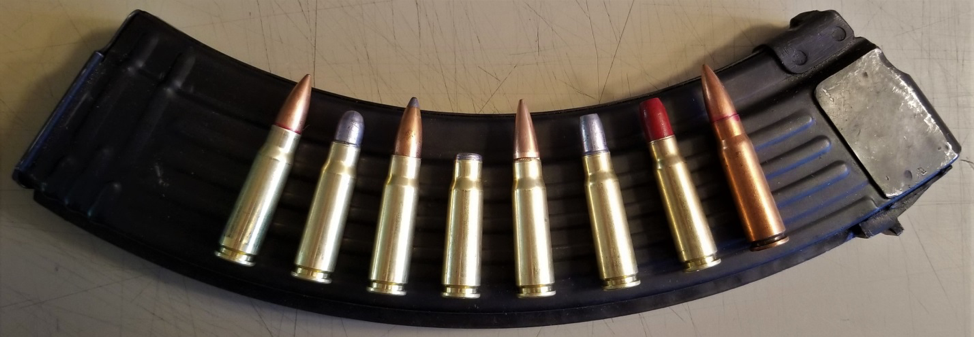
From L to R: 122gr. .311” FMJ, 125gr. .311” Cast Round Nose, 150gr. .311” Sierra Soft Point, 100gr. .308” Cast Wad Cutter, 150gr. .308” Hornady FMJ Boat Tail, 165gr. .308” Cast Flat Point, 265gr. .308” Hi-Tek Coated (Used for 300AAC) 122gr. Chinese made FMJ.
Here is a bit of friendly advice from someone who’s made these beginner’s mistakes. Load 10-15 rounds and shoot them through your rifle to make sure they function flawlessly. If you’re chronographing, this will allow you to perform both functions. If they are unsatisfactory or unsafe, shoot the rest (again if safe to do so) or pull the bullets and record that load under the (BAD LOAD) column in your personal reloading data book. This keeps you from having to pull 20, 50 or 100 bullets. It’s not a fun job; been there done that.
Another tip is to chamber check your loads at home. Chamber checkers are sold by Midway and Brownell’s. In a pinch, you must (REMOVE) your rifle bolt or disassemble your handgun and drop it in the barrel’s chamber. If it sticks, use a cleaning rod to gently push or tap it out and figure out what went wrong. A correctly sized load should easily chamber and fall free when the rifle or pistol barrel is turned upside down. OAL (Over All Length) is especially important when it comes to chambers and firearms magazines. If the cartridge is too long, it will not allow you to fully chamber the round and will not lock up, jam the magazine, or both. Chamber check handloads and reloads during other range activities and avoid function checking live rounds inside your home. Bad things happen, police are called, and handcuffs are applied.
Finding out you have an issue with your loads at home enables you to make corrections, which is next to impossible in the field. Unless you carry a reloading press in your vehicle; something I’ve only seen once in my 43 years of shooting.
There is a bit of contention between the term Handloading and Reloading. Here’s my simple explanation. Handloading is the assembly of new components to manufacture a round of ammunition for the purposes of competition or hunting. Reloading is the process of using your spent range brass to re-manufacture the same or similar round of ammunition. Either way you look at it, you’re accomplishing the same end goal.
So, what happens after the initial firing? Clean your brass using a case tumbler. I prefer Dillon’s CV-2001 Vibratory Case Cleaner and CM-2000 Case/Media Separator because of their large capacities. This makes cleaning, media separation and inspection easier and keeps the dirt from damaging the inside of your dies. Another great brass processing aid is the Dillon Shell Sorting Pans. Simply place on any 5-gallon bucket, shake your pans one at a time starting from the top and your brass is sorted by caliber. Inspect brass for cracks. Small dents are fine as they will fire form (Using the explosion inside the chamber to push out the dents) out on the next firing. Then resize and de-prime your cases and move to the next step.
After inspection, check whether the fired brass is within reloadable length specifications. Use a Lyman E-ZEE Case Length Gauge or for more precise measuring, a RCBS Dial Caliper/Case Length Gauge. If they are too long and need trimming, just set the trim length on your RCBS Trip Pro 2 case trimmer, equipped with an RCBS .30 Caliber Trim Pro Three Way Cutter and remove the excess so the trim to length measurement is achieved. If it’s within spec, the cutter will not remove any brass. Simply move on to the next case.
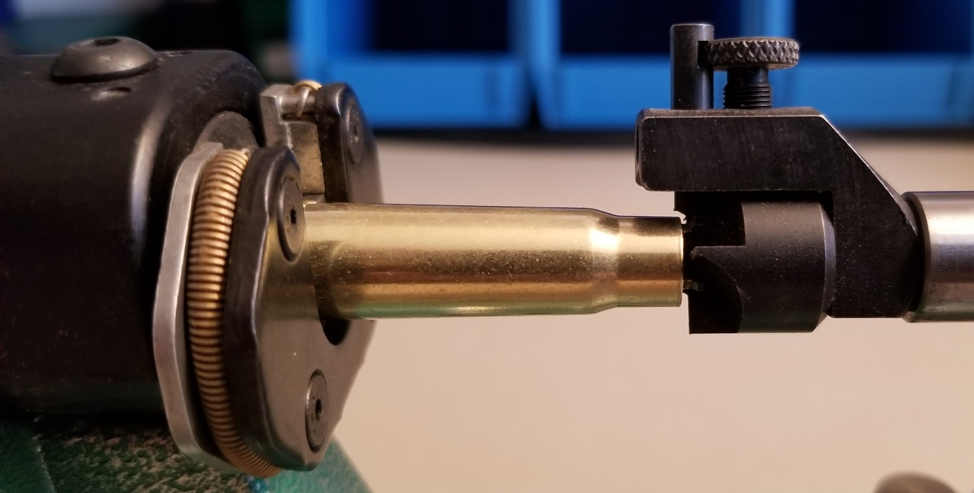
Trimming your fired 7.62x39 brass on the RCBS Trip Pro 2 case trimmer, equipped with an RCBS .30 Caliber Trim Pro Three Way Cutter makes the job easy.
A trimming hack I’ve developed is taking a new or used case
and trimming it to its specified Trim-to length, 1.518 for a 7.62x39. Use a P-touch labeling machine or sharpie to
mark the caliber and TTL. Next time you trim that caliber, just use that case to quickly set up your trimmer. This
is a basic explanation of the process. If you have any questions or doubts on what you want to accomplish, ask an
experienced loader or call RCBS at 800-379-1732. A representative will be available to answer your calls between 7
a.m. – 4:30 p.m. PST Monday through Friday.
If you want to read more on the loading process, visit the RCBS or Hodgdon websites for cartridge loading videos and instruction. Or, if you’re technically challenged, simply read your reloading manual. They all walk you through the simple steps of reloading and contain a section that familiarizes you with reloading jargon.
http://rcbs.com/Resources/Introduction-to-Handloading/Handloading-Basics.aspx
http://www.hodgdonreloading.com/reloading-education
HAND LOAD CHRONOGRAPH RESULTS | PTI
AK-47S | 7.62X39MM
| BULLET WT. / MANUFACTURER: | POWDER: | AV:(FPS) | SD: |
| 122gr. .311” Pulled Bullets / Chinese Made | 25gr. IMR4198 | 2369.1 | 27.9 |
| 125gr. .311” Cast Round Nose | 18gr. 5744 | 1760.1 | 31.2 |
| 150gr. .311” Sierra Soft Point | 21.7gr. 1680 | 2020.8 | 24.3 |
| 100gr. .308” Cast Wad Cutters | 6gr. Unique | 1418.1 | 27.4 |
| 150gr. .308” Hornady FMJ Boat Tail | 22.1gr. IMR4198 | 2011 | 31.0 |
| 165gr. .308” Cast Flat Point | 10gr. Unique | 1397.4 | 20.2 |
| 265gr. .308” Hi-Tek Coated (Used for 300AAC) | 7gr. Unique | 904.3 | 9.2 |
Notes: Velocities figures are derived from a ten-round average recorded on a Caldwell Ballistic Precision Chronograph G2 placed 15 feet from the muzzle. Velocities will vary for each loading depending on factors such as bullets, powder and primers used. Abbreviations:(AV): Average Velocity of all ten rounds fired through the chronograph (Standard Deviation): The lower the SD, the better the accuracy/performance with that load and firearm combination.
I’ve always enjoyed passing on the knowledge I’ve learned. I’m still learning something new every day I sit behind my press. But there are some lessons in the loading process you must FEEL for yourself that books and the web can’t explain. Hands on is always your best teacher.
The advantage you as a loader have in this high-tech world is the information is literally right at your fingertips, as is the history of this iconic firearm and cartridge. Starline Brass produces high quality brass and their 7.62x39mm brass is no exception. It comes ready to accept your .311” diameter bullets and it’s offered in quantities of 250, 500 or 1000 pieces.
Starline carries standard caliber brass as well as some unique and hard to find offerings, so after you finish reading this article, be sure to browse their inventory and see if they have the brass you’re looking for. Here are some of their new calibers recently released; the 224 Valkyrie (Small Rifle primer), SR 6mm CM (Small Rifle primer), .308 Match (Small Rifle primer), and 455 Webley MKII (Large Pistol primer).
Contributors:
Starline Brass: (660) 826-6640 www.starlinebrass.com
RCBS: (800) 379-1732 www.rcbs.com
Hodgdon Powders: (913) 362-9455 www.hodgdonreloading.com
Caldwell: (877) 509-9160 www.btibrands.com
Bob Shell: Shell Reloading [email protected]
DISCLAIMER: All reloading data in this article is for informational purposes only. Starline Brass and the author accept no responsibility for use of the data in this article.
When it comes to hand-loading, education is key. Without having a base knowledge of how hand-loading works, you will have a hard time deciphering what components you will need when you first start reloading. The best place to start would be a reloading manual. Most reloading manuals have in depth explanations on components and how to use them that will help you tremendously on your path.
Some of the questions you might be asking yourself as a new
reloader: Is it better to buy a prepackaged kit or buy the equipment needed individually? What items will need to
be added which aren’t included in the most kits? We break it all down for you here.
What do most reloading kits come with?
Several manufacturers including Hornady, RCBS, and Redding
offer a beginning reloaders kit. These reloading kits generally include the following items: a single stage press,
powder thrower, scale, reloading block, sometimes a manual, hand primer, and brass lube. These will start you off on
your handloading venture with the bare minimums to make handloads.
The Single Stage Press is the key component.
The single stage press will allow you to insert one
reloading die at a time. Once your die is set to your desired depth, you can start processing your handloads one
brass casing at a time. To elaborate, you will insert your resizing die first, screw it in into the press itself to
the desired depth of the instructions included with your dies, insert your brass casing into the shell holder, and
pull the handle to resize your brass. You will repeat this process for however many rounds you plan on loading. You
will then screw in your other supplied reloading die for the next process of hand-loading.
- Powder Measure and Scale
The traditional supplied powder thrower and scale that is in
most reloading kits will allow you to use a manual hand dial and a lever to dispense powder. You will then have to
take that powder and weigh it on a scale to make sure that you are dispensing the correct amount. You can get by
with the power thrower most kits include, but if you want to speed up the process with something that is faster and
very accurate, you may want to upgrade to an electric powder dispenser.
- The Reloading Block
The reloading blocks that come in kits are great. A block
will allow you to line up your cartridges individually and upright for different stages of the reloading process. If
you don’t feel like purchasing a reloading block, you can make your own with a block of wood and a drill press.
- Reloading Manual
If you reload, you have to purchase a manual. This will give
you all the data about how much powder should go into the ammo you are making, how long the cartridge should be,
what types of bullets you can use, and other great data.
Here’s a list of a few manuals that you would like: Nosler Reloading Guide , Berger Bullets
manual, and Barnes Reloading Manual.
However, I recommend purchasing a reloading manual that correlates with the projectiles you plan on using to look at
the most accurate data.
- Hand Primer
Hand primers are a great tool and are usually in most
reloading kits. This will allow you to insert a primer into the base of your brass cartridge when it is time in the
reloading process. There are many forms of priming mechanisms that include hand primers and bench mounted priming
systems.
- Brass Lube
This will lube your brass so that it won’t become stuck
inside your dies.
Things Not Included in Most Beginner Kits
Most beginner kits do not include a vibratory tumbler,
calipers, case gauge, dies, a chamfer and deburring tool, an annealing machine, or a trimmer. The first additional
item you will need to acquire will be a set of dies for the cartridge you will be reloading for.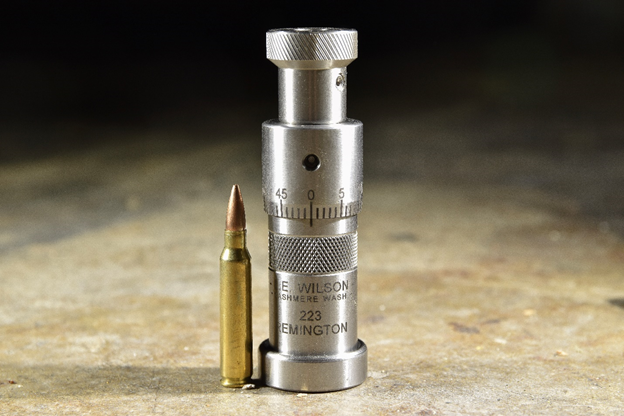
Dies are used to resize your
brass back to spec, neck resize, crimping, and even putting a “bell” on your pistol cartridges that allow easier
seating of projectiles. However, there are many different types of dies and procedures you would use them for. I
recommend using a full-length die size
kit for you to get started. When you
get used to hand-loading, start investing your time into researching new types of dies and how they can benefit
the cartridges you load for.
A vibratory
tumbler is used to
clean brass if it is dirty or has other types of residue and debris inside. A lot of kits
will give you everything you will need to clean it out. Moreover, once your brass is shiny and clean, you can than
start to resize the brass. This will also help the longevity of your dies so that residue does not build up inside.
This is a very important piece of equipment you will need when processing once fired brass or range pick-ups.
You can upgrade to a wet tumbler or even an ultrasonic
cleaner in the future. Dry tumblers traditionally use corn cob media and a polish. Wet tumblers use stainless steel
media, water, and a polish. Ultra-sonic cleaner uses hot water, vibrations, and solvent. It’s essentially a hot tub
that uses vibrations to remove carbon and any other debris.
Calipers - In your reloading
manual, it has requirements of measurements pertaining to what cartridge you are making. For example, how long the
cartridge should be from bottom of the base to the tip of the projectile you seat. Moreover, this is known as O.A.L,
which stands for Overall Length. This tool will help you measure your rounds.
The calipers that come in kits are usually pretty good.
However, the digital ones will require you to replace the battery. There are very few on the market that make
excellent electronic calipers, but they tend to be expensive. Old fashion calipers are the way to go and are always
very accurate.
Case Gauge - A case gauge is
essentially going to tell you whether or not your reloads will be able to fit inside your chamber. What is so great
about this tool is the fact you can check your first reload once you have completed it. That way, if you make a
hundred reloads without using one of these and hit the range, you won’t be disappointed when you find out all of
your reloads were not made correctly.
A Chamfering and Deburring
Tool is a great tool to use after trimming and resizing your brass in your die.
It will allow you to put an “edge” on the inside of your brass case mouth so that you may freely seat a projectile.
Otherwise, you will have trouble seating your projectiles. In most cases, as you seat the projectile without
chamfering and deburring, you will see that copper from the bullet is being shaved away from the rough edge of the
brass casing.
Trimming is most time-consuming part of reloading and one of
the most important. You will have to trim your brass because over time, and multiple reloads, your brass becomes
longer and out of spec. A trimming tool will allow you to trim your brass when it is becoming too long. You will
measure this using your calipers and compare your measurement with the data inside of your reloading manual.
When it comes to trimmers, there are very many on the market
for the reloader. They have hand cranked, hand drill, and motor operated forms of brass prep stations. I personally
recommend a hand drill or motor operated brass trimmer. However, there are some hand crank trimmers that are more
accurate then most hand drill or motor operated. Some hand operated brass trimmers have accessories to add a motor
on it.
Annealing is a great addition to any bench and also
a great investment. The reason hand-loaders anneal brass is extend its longevity. Overtime, as you shoot reloads and
resize brass, the brass casing starts to get harder and crack. If you anneal your brass casing, it will soften the
neck area of the brass and seal the areas during firing. Hence, extending the longevity of your brass for further
reloads. If you want to find out more about it, you can read more here: https://www.reloadingallday.com/home/what-is-annealing
Equipment I personally recommend if you plan on making
your own kit:
If you plan on buying everything separate, I have listed the
components that will get you off to a great start. Keep in mind that reloading products is like shopping for a new
gun. You want to look everywhere for prices. Make sure you compare components, look at reviews, and decide on which
is the best set up for you.
- The Reloading Press
For
the beginner, I personally recommend the Sinclair/L.E. Wilson Hand Die Kit W/Micro Top. This will be a very easy beginner press.
Not only is it the most affordable, but this will allow you to make all of your ammo. This is the most important
thing you should acquire first. I personally own and use Forster COAX, Dillon 550RL, Dillon 650XL, Lee Classic Cast,
and L.E. Wilson hand dies.
- Powder Thrower
Manual or electronically operated throwers all have their
benefits. Moreover, it is entirely up to the individual which one they would like. Electronic forms will tend to be
a little more expensive compared to manual. I will say that manual forms of powder throwers can be more accurate
than electronic dispensers depending on which brand you choose. Most of all, do your research and pick accordingly.
I
personally recommend the RCBS Chargemaster Lite. Essentially, this machine will allow you to enter in a
desired amount of powder that will be electronically dispensed and weighed all at the same time, greatly speeding up
the powder measuring process.
- Reloading Manual
Reloading manuals are an essential, you must have one. I
recommend choosing a manual that correlates with your projectiles that you are shooting. So, if you are reloading
Hornady projectiles, you should look inside of a Hornady manual for the most accurate data. However, load manuals
all have their differences. You should acquire a few different books and compare data.
- Dies
I use RCBS, Dillon, Lee, Forster dies. I personally like
full-length resizing dies. However, I recommend that you do your research on full-length and neck resizing dies.
- Calipers
I personally use RCBS and Mitutoyo.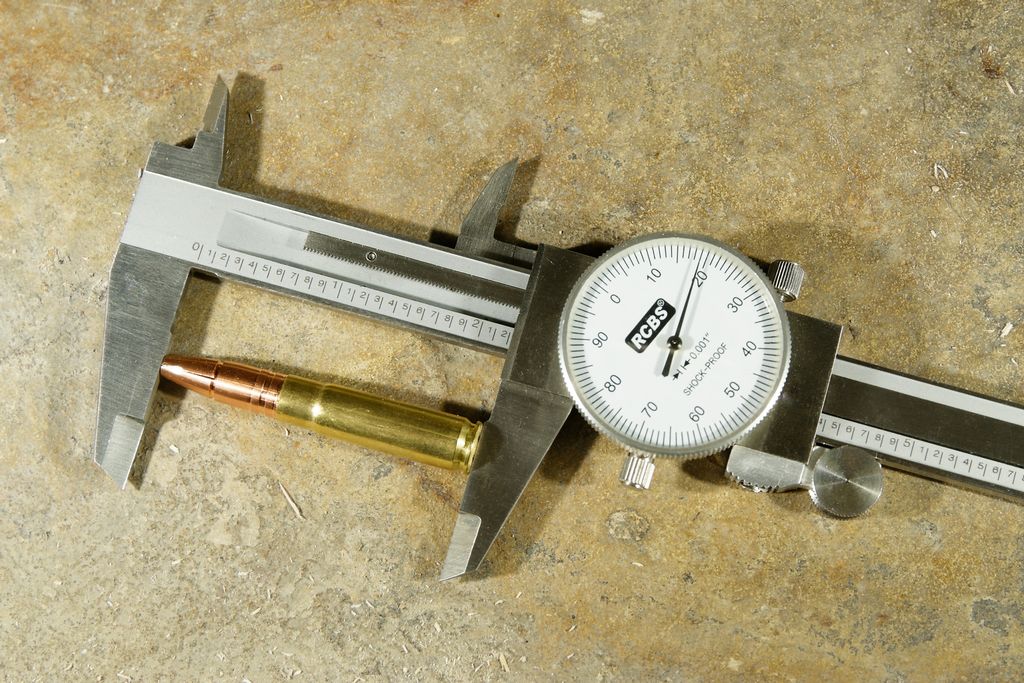
6. Vibratory Tumbler
I use the Lyman 2200 Auto-Flo, Frankford Arsenal quick-n-ez
tumber, Hornady Hot Tub, Frankford Arsenal wet tumbler, and a Thumlers wet tumbler.
- Hand Primer
I usually prime on my press, but I have Lee precision Auto
Prime and a Sinclair International.
- Case Gauge
Case gauges are an awesome tool like I previously have
mentioned. I have a plethora of different case gauges. L.E. Wilson, Lyman, Hornady, and EGW all make great gauges.
Any case gauge you choose, make sure to read the comments and reviews. I have never had a problem with any of mine.
They are always very accurate.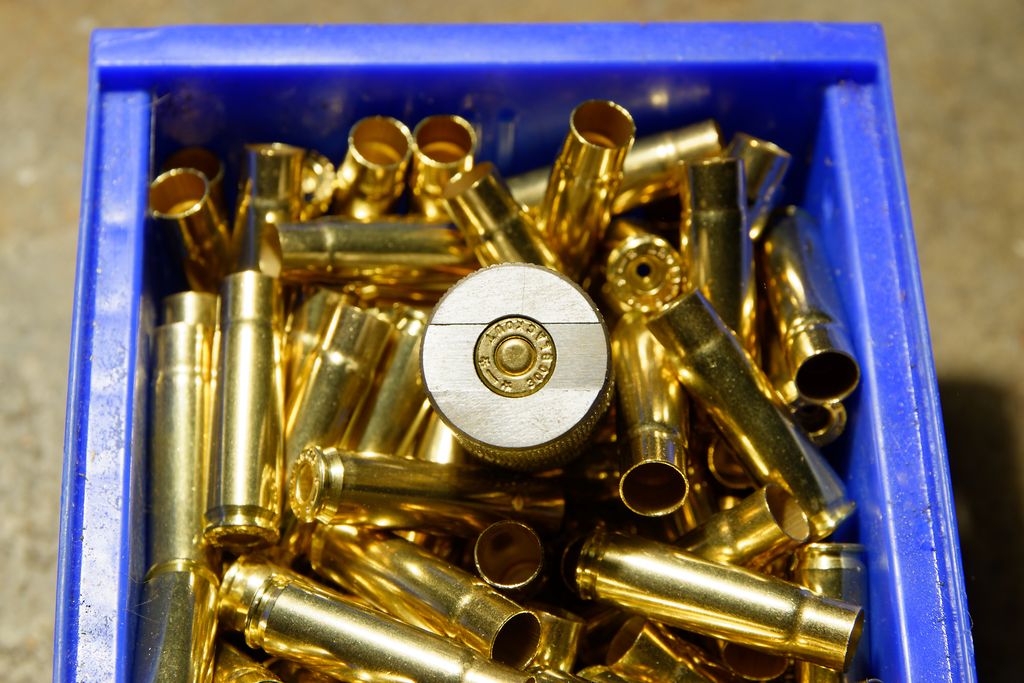
- Brass Trimmer
I recommend the L.E. Wilson Stainless Trimmer because of
its accuracy and cost. I use this all the time when trimming 6.5 Creedmoor Starline Brass and it cuts like butter. I
have a few, but I recommend something with a motor or getting a motor attachment. After hand cranking a hundred
pieces of brass your hand will start to cramp. It is definately a helpful tool to have a motor, but you can use the
trimmer just as effective without one. I personally own the RCBS brass prep station, L.E. Wilson hand trimmer, Lyman
hand trimmer, and a Little Crow Gunworks.
- Chamfer and Deburring Tool
I personally like the L.E. Wilson Chamfer and Deburring
tool. However, there is many on the market and they all perform perfectly.
- Brass Lube
I use Hornady and my own homemade recipe. If you would like
to save some money, try researching homemade brass lube.
- Annealer
I use the Bench Source annealer. There are very few on the
market. The majority are within the $275-500 range. Then, they will jump up to around a $1000 or more. The cheaper
options use a butane torch, while the more expensive options use induction heating methods to anneal the brass
accurately to the right temperature.
Piecing together your own reloading kit is one of the things
I wish I had done earlier. However, I do recommend taking a look at some of the reloading kits on the market. You
can definately start to reload with the items given to you. Although, it is up to you as a reloader if you decide to
pursue the other reloading components I have listed to make things a little easier.
If you do decide to make your own set up, I highly encourage
you start your research with what reloading press would fit your style of shooting. I advise comparing the two
together for cost, longevity, performance, maintenance, and warranty.
As always, be safe, shoot straight, and happy reloading!
About the Writer:
Blake Williams

Blake started hand-loading at the age of 14 when he received his first reloading kit. From that moment, reloading has influenced his whole shooting career with the endless possibilities of what this art brings to the table. He enjoys reloading with his friends and shooting whenever he gets the chance. Blake has been dedicating his life to influencing younger generations to learn about hand-loading so the great hobby lives on forever. He has worked with multiple industry partners pursuing this dream and now currently runs an educational website featuring reloading information.
https://www.starlinebrass.com/media/a8/b0/43/1759435063/complete-65-creedmoor-guide-reloading-65-creedmoor-ballistics.pdf?ts=1759435063